Firearm Comparison: How to Choose
Choosing between a Glock 19 and a SIG Sauer P365XL isn’t just about brand preference; it’s a decision between a proven duty-sized workhorse and a modern micro-compact designed for all-day concealed carry. The right tool depends entirely on your mission, and that mission defines every meaningful comparison.
Defining the Mission: Carry, Home, or Range?
Before comparing calibers or features, you must define the firearm’s primary role. A dedicated concealed carry pistol prioritizes size, weight, and concealability—think Smith & Wesson Shield Plus or SIG P365. A home defense firearm can be larger, favoring light-bearing rails, higher capacity, and softer recoil, like a full-size Glock 17 or a Smith & Wesson M&P9. A range or competition gun emphasizes trigger quality, sight radius, and ergonomics for precision, such as a CZ Shadow 2. Mixing these roles leads to compromise. You wouldn’t choose a snub-nose .38 for USPSA, just as you wouldn’t conceal a 17-round duty pistol in a t-shirt. At Firearms Alabama, we start every conversation by asking, “What is this gun’s job?”
The Caliber Debate: 9mm vs. .45 ACP vs. .380 ACP
Let’s cut through the noise. For nearly all modern defensive applications, 9mm Luger is the rational choice. With today’s advanced hollow-point ammunition (like Federal HST or Speer Gold Dot), its terminal performance meets or exceeds larger calibers, while offering higher capacity, lower recoil, and lower cost for training. The .45 ACP delivers more energy per round, but you sacrifice capacity—a standard 1911 holds 7+1 rounds versus 15+1 in a comparable 9mm. Recoil is also more pronounced, impacting follow-up shot speed. The .380 ACP, as seen in pistols like the Ruger LCP Max, is a legitimate option for deep concealment where a 9mm micro-compact is still too large, but it requires careful ammunition selection. For a one-gun solution, 9mm is king.

Glock 19 Gen5 – The quintessential do-it-all 9mm. 15+1 capacity, proven reliability, and a size that balances carry and capability. View Details
Action Types: Striker-Fired vs. Hammer-Fired
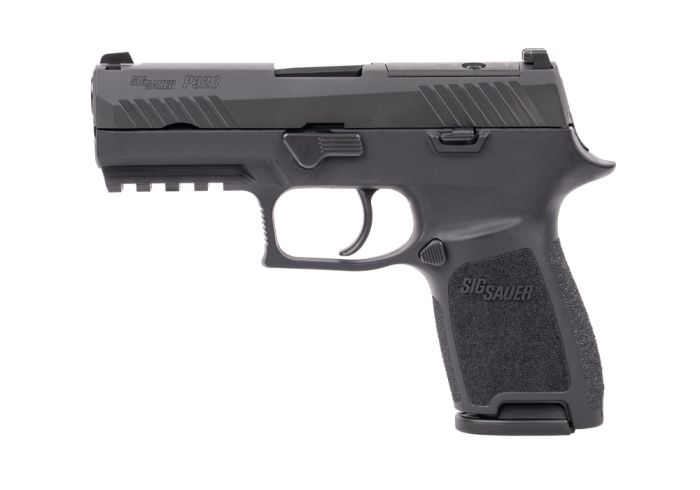
The modern striker-fired pistol (Glock, Smith & Wesson M&P, SIG P320) dominates the market for good reason: consistent trigger pull, simpler manual of arms, and fewer external controls. They’re generally slimmer and more reliable out of the box for the average user. Hammer-fired guns, like the classic 1911 or the CZ P-01, offer a different experience. A single-action 1911 trigger is often superior for precision, but requires carrying cocked-and-locked. Traditional double-action/single-action (DA/SA) pistols, like the Beretta 92FS, provide a heavy first pull for safety, transitioning to a lighter single-action pull. The choice hinges on training and preference. For a defensive tool under stress, the consistent pull of a striker system is hard to beat.
Size & Concealability: Full-Size, Compact, Micro
Size directly impacts shootability and concealment. A full-size pistol (Glock 17, 5″ barrel) offers a full grip, longer sight radius, and softer recoil, making it ideal for home defense or open carry. A compact (Glock 19, 4″ barrel) trims the barrel and grip slightly, becoming a versatile hybrid. A subcompact (Glock 26) shortens the grip, often sacrificing a finger or two, prioritizing concealment. The new micro-compact category (SIG P365, Springfield Hellcat) uses innovative magazine design to offer 10+ rounds in a package nearly as small as a single-stack .380. The trade-off is increased felt recoil and a smaller grip surface. Your body type, wardrobe, and holster choice are as important as the firearm’s dimensions when comparing size.

SIG Sauer P365XL – A micro-compact that shoots like a compact. 12+1 rounds, optic-ready slide, and an extended grip for control. View Details
Key Features: Optics, Lights, and Triggers
Modern upgrades are now standard considerations. An optics-ready slide (OR) is a must for any serious defensive or competition pistol, allowing direct mounting of red dots like the Holosun 507C or Trijicon RMR. The increased speed of target acquisition is transformative. A Picatinny accessory rail for a weapon light (Streamlight TLR-7A, SureFire X300) is non-negotiable for a home defense gun—positive identification is critical. As for triggers, most factory triggers are adequate, but aftermarket options from companies like Apex Tactical can enhance break and reset. However, reliability should never be sacrificed for a marginally better pull. When you compare models at Firearms Alabama, we factor in these ready-to-run features from the start.
Is a more expensive firearm always better?
Not necessarily. A $500 Smith & Wesson M&P9 M2.0 is a supremely reliable, accurate, and feature-rich handgun that will perform 99% of what a $1,000 custom 1911 will do for defensive use. You pay more for refinements in materials, trigger quality, hand-fitting, and brand prestige. For a duty or carry gun, invest in proven reliability first, then ammunition and training.
Should my first pistol be a revolver or a semi-auto?
For most new shooters today, a modern striker-fired semi-automatic in 9mm is the better choice. Revolvers are simple to operate but have limited capacity (typically 5-6 rounds), a heavy double-action trigger, and are slower to reload. A semi-auto like a Glock 19 or S&W Shield offers higher capacity, easier recoil management, and a more direct learning path for foundational skills. Revolvers still excel in specific niches, like deep-concealment .38 Specials or large-caliber hunting.
How important is aftermarket support?
Extremely important if you plan to customize. Platforms like the Glock, SIG P320, and AR-15 have vast ecosystems for holsters, sights, triggers, and parts. A more obscure or imported firearm may have limited options. Before you buy, check for the availability of holsters that fit your preferred carry method and magazines—the most critical accessories.
Ready to put these comparisons to the test? Handle the top contenders side-by-side to see what fits your hand and your mission.
Browse our firearms collection
Last updated: March 27, 2026